
3 nights in Rome, 3 new restaurants. Now my top 3 best Italian meals of all time.
We had a favorite Roman restaurant for four years. Seemor said there was better. Seemor was right.
Rome is one of my very favorite cities. The energy, the history, the people, and especially the food are all amazing. My whole family loves it there. We've been lucky enough to visit 4 times in the last five years. It's hard to find truly bad food in Rome, but there are a lot of tourist traps that aren't ideal. On our first trip we stumbled upon a great restaurant called Mimì e Cocò, in the centro storico. Great setting, lively energy, phenomenal food. We loved it. Every trip, we'd go back, and every trip it delivered. Compared to everywhere else we'd eaten in Rome, it was easily the best. We've spent a lot of time in Tuscany, Sicily, Venice and lots of other places in Italy and Mimi e Coco was our favorite Italian of anywhere.
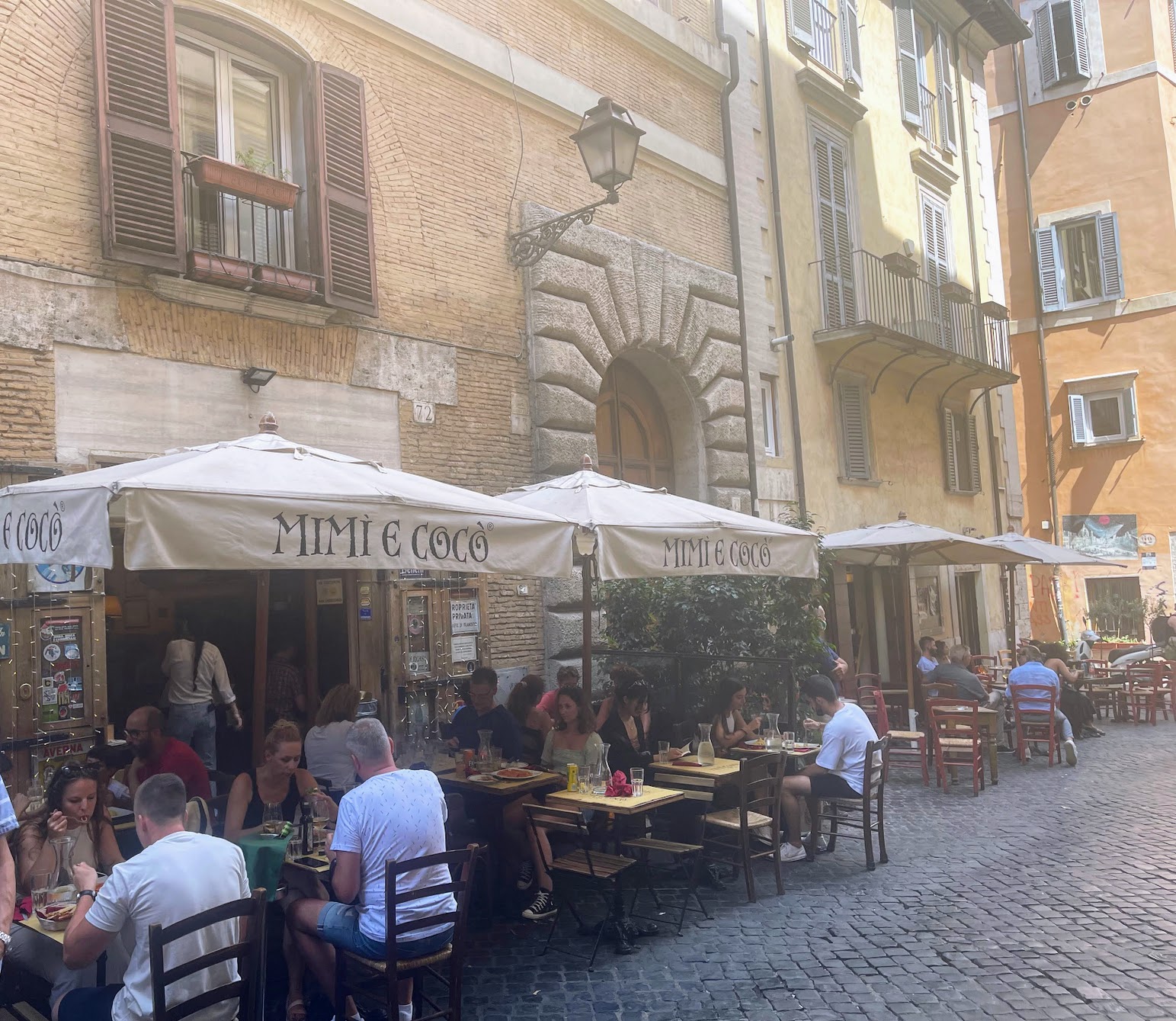
Last week we went just for 3 days primarily to eat great italian food. On our first night we went back to Mimi e Coco and it was as good as ever. Seemor only grades it as a B+ which is a good grade, but seemed low for our favorite Italian restaurant. According to Seemor, only 2.9% of restaurants in Rome are A range, so we decided to put Seemor to the test and see if its A-rated restaurants were actually better. They were. By a lot.
The results were, honestly, humbling. Not because Mimì e Cocò is bad. It isn't. It's a B+ with a food quality score of 7.7 out of 10 and a Google rating of 4.7 with nearly 10,000 reviews. That's a genuinely good restaurant, and it would be a strong recommendation for anyone staying in that part of the city.
But the three restaurants Seemor pointed us to scored 8.4, 8.5, and 8.6 on food quality. All A-range. We didn't know how wide the gap was between "good Roman food" and "the best Roman food we've ever had" until we experienced it.
The data behind the story
Here's what we ate, and what the numbers say. Seemor's scores come from analyzing what reviewers actually write about each restaurant, not the star ratings themselves. Food quality measures what people say about the cooking. Authenticity measures how well a restaurant represents its cuisine. Local vs tourist measures who's actually eating there. All on a 1-10 scale, all derived from review text and menu analysis.
| Google Rating | Seemor Grade | Food Quality | Authenticity | Local vs Tourist | |
|---|---|---|---|---|---|
| La Pace del Palato | 4.7 | A | 8.6 | 7.6 | 7.2 |
| EVO Hosteria | 4.6 | A | 8.5 | 7.5 | 7.2 |
| Lo Scopettaro | 4.4 | A- | 8.4 | 9.0 | 7.6 |
| Mimì e Cocò | 4.7 | B+ | 7.7 | 7.0 | 6.5 |
The Google ratings are nearly identical. The experiences were not. Scopettaro, with the lowest Google rating of the four, had the highest authenticity score and the most local clientele. Mimì e Cocò, tied for the highest Google rating, had the lowest food quality and the most tourist-heavy crowd.
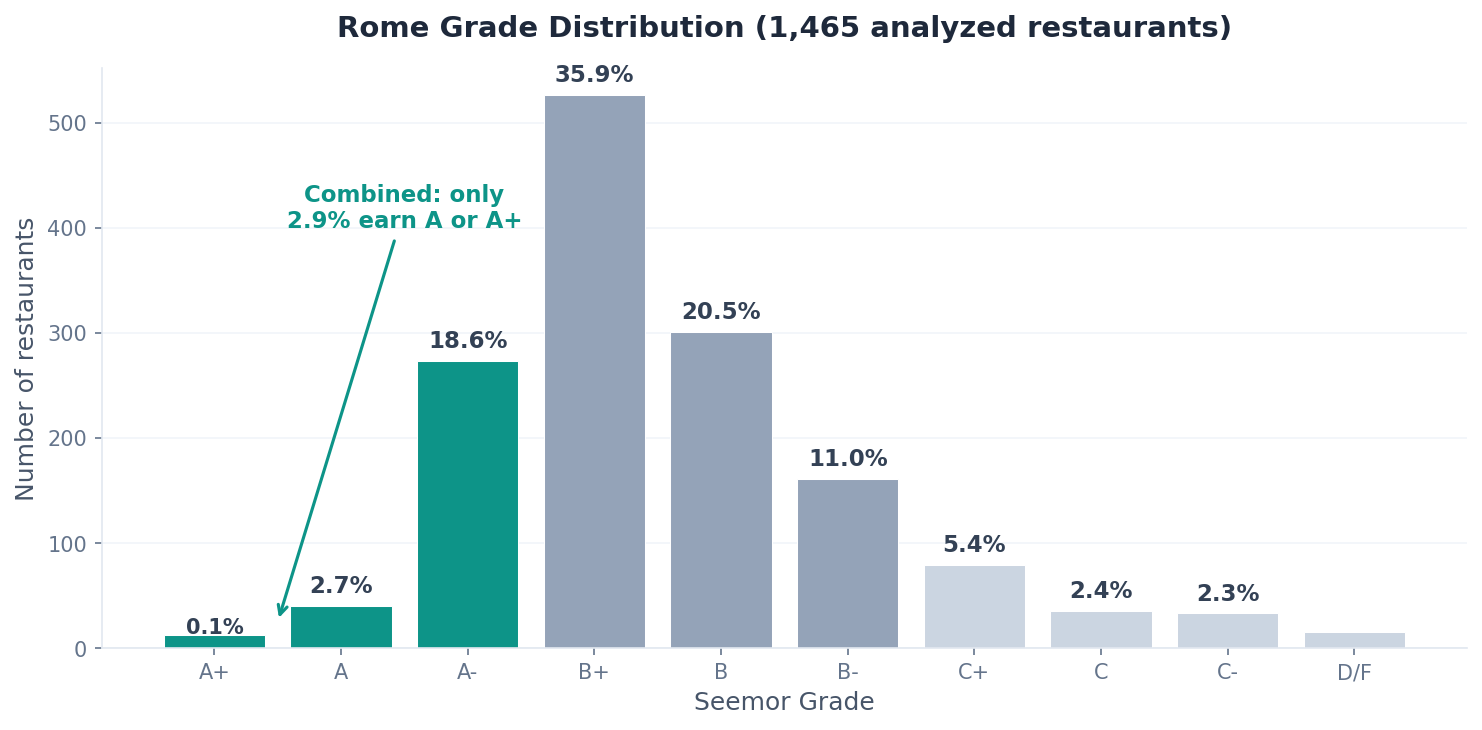
We've analyzed nearly 1,500 restaurants in Rome. Only 42 earn an A or A+. That's 2.9%. Another 273 earn an A-. The bulk of Rome, about half of all analyzed restaurants, sits in the B+ to B range. Which makes sense. It's Italian food in Italy. The floor is high. Almost everything is at least decent because the ingredients are good and the traditions run deep.
But "decent" and "extraordinary" are not the same thing, and the gap between the two is far larger than we had imagined before this trip.
Night 1: Lo Scopettaro
Seemor grade: A-. Google rating: 4.4. Food quality: 8.4. Cuisine authenticity: 9.0.
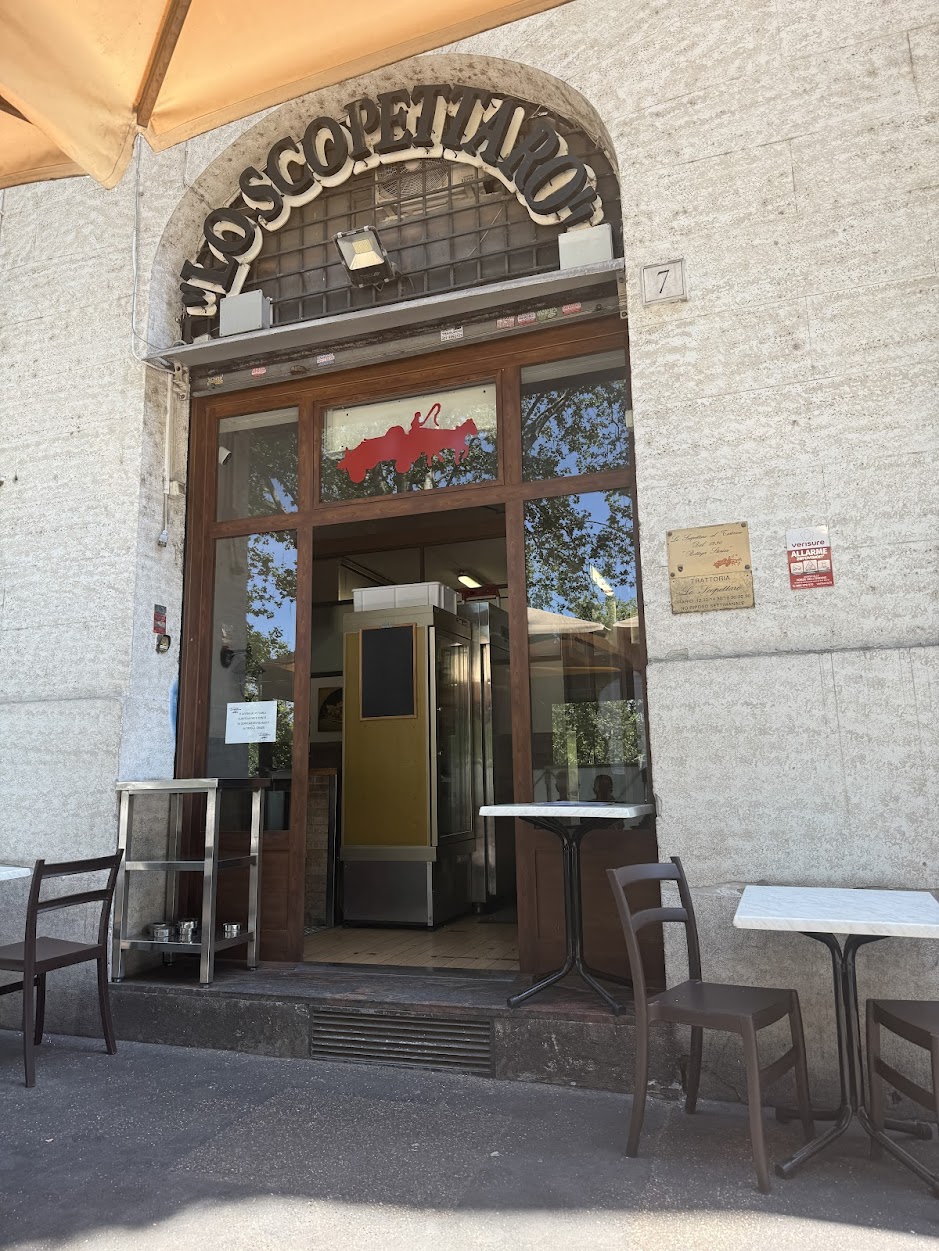
You would never pick this place based on how it looks. Lo Scopettaro is in Testaccio, away from the tourist center. The exterior is a stone building with metal lettering. Inside is tiny. The patio is plastic tables under a canvas tarp, right next to a busy street. There is no ambience. None. They hand you a paper placemat with the restaurant name on it and a QR code for the menu.
The bill arrives handwritten on a small paper pad.
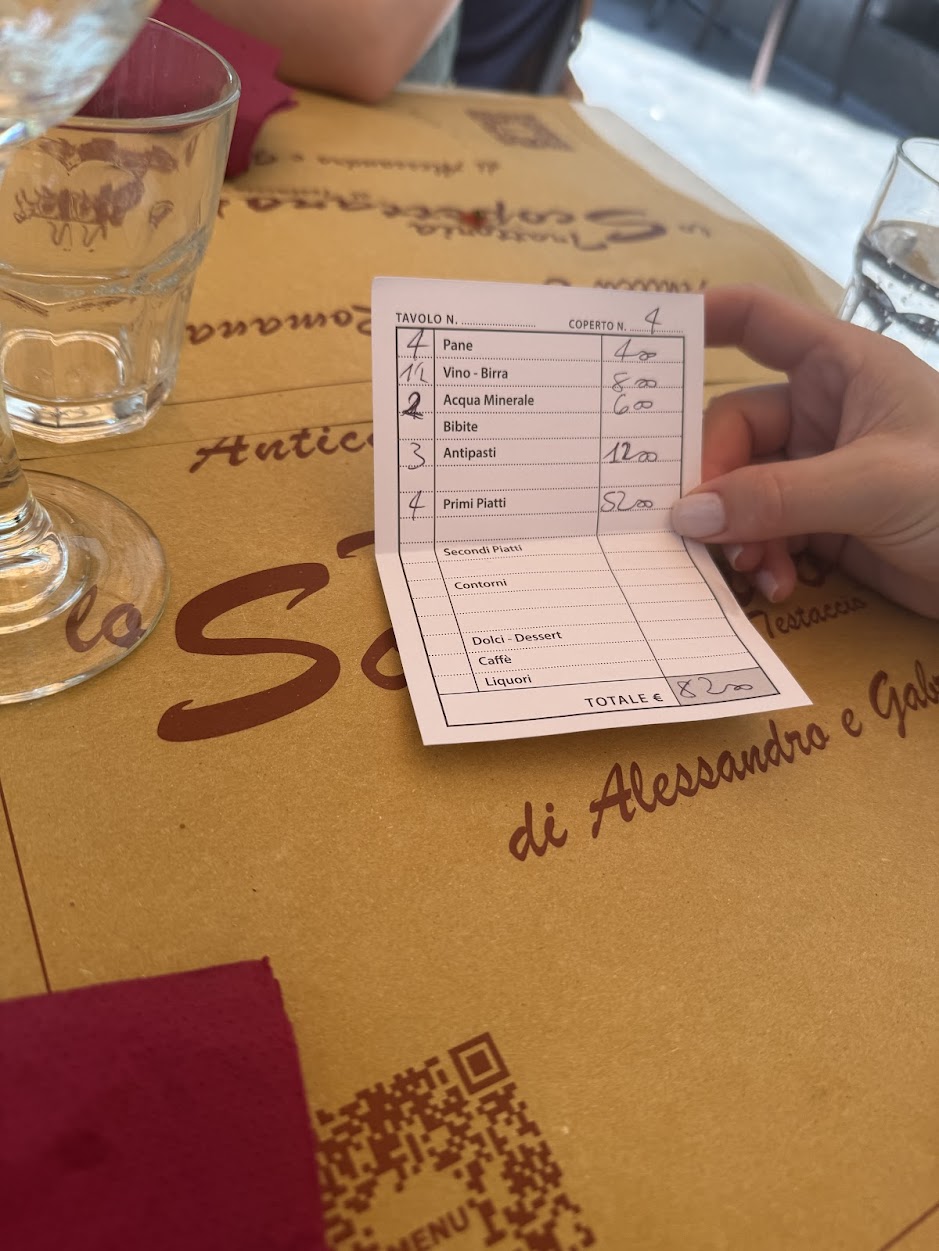
None of that matters because the food is ridiculously good.
We ordered the Roman classics: cacio e pepe, carbonara, amatriciana, a Roman artichoke, and bruschetta. Just the basics. Nothing creative, nothing modern. But done at a level we had not imagined was possible. The carbonara in particular was unlike any version we'd had before. Rich, golden, perfectly balanced between egg and cheese and guanciale, with rigatoni that had exactly the right bite. We cleaned the plate.
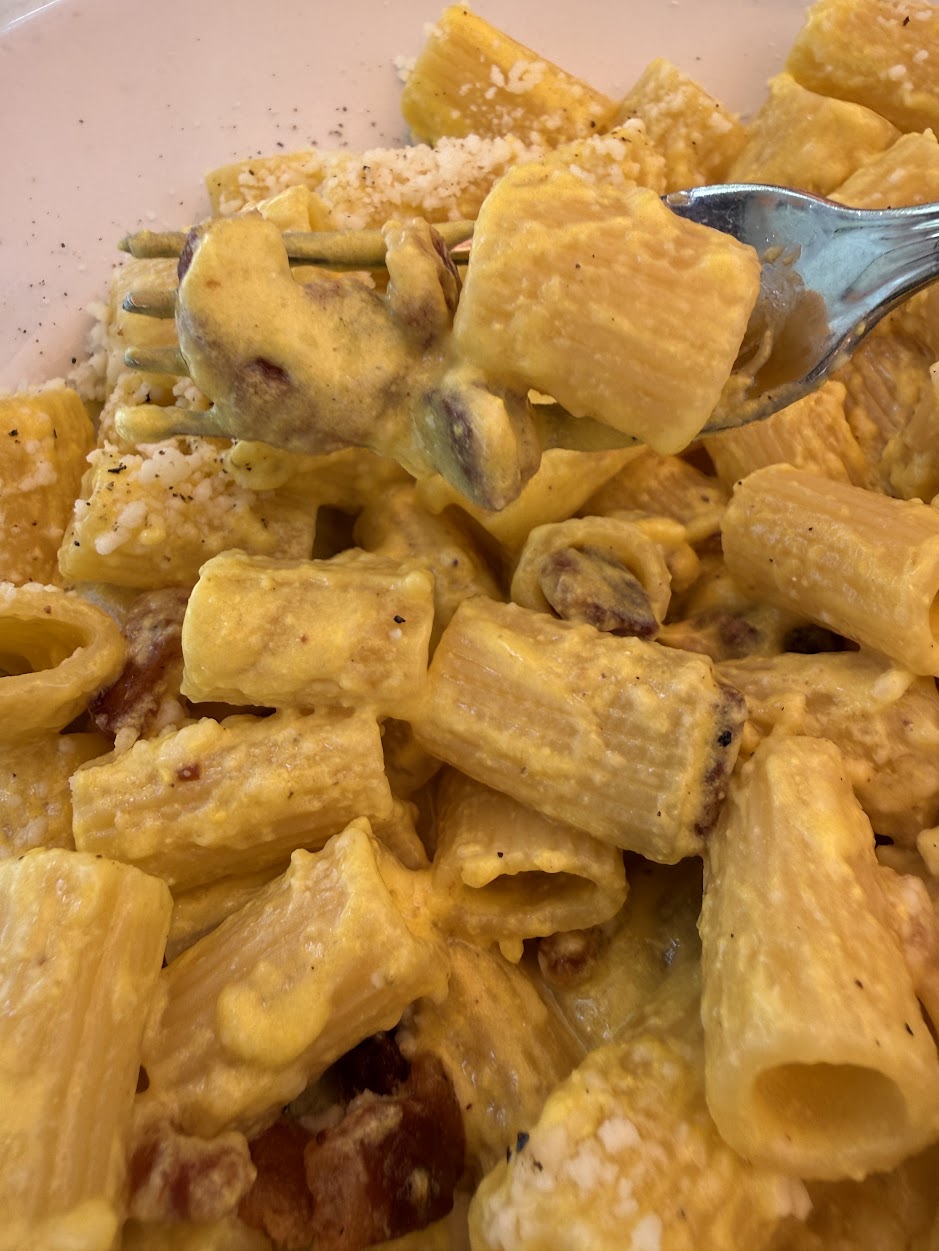
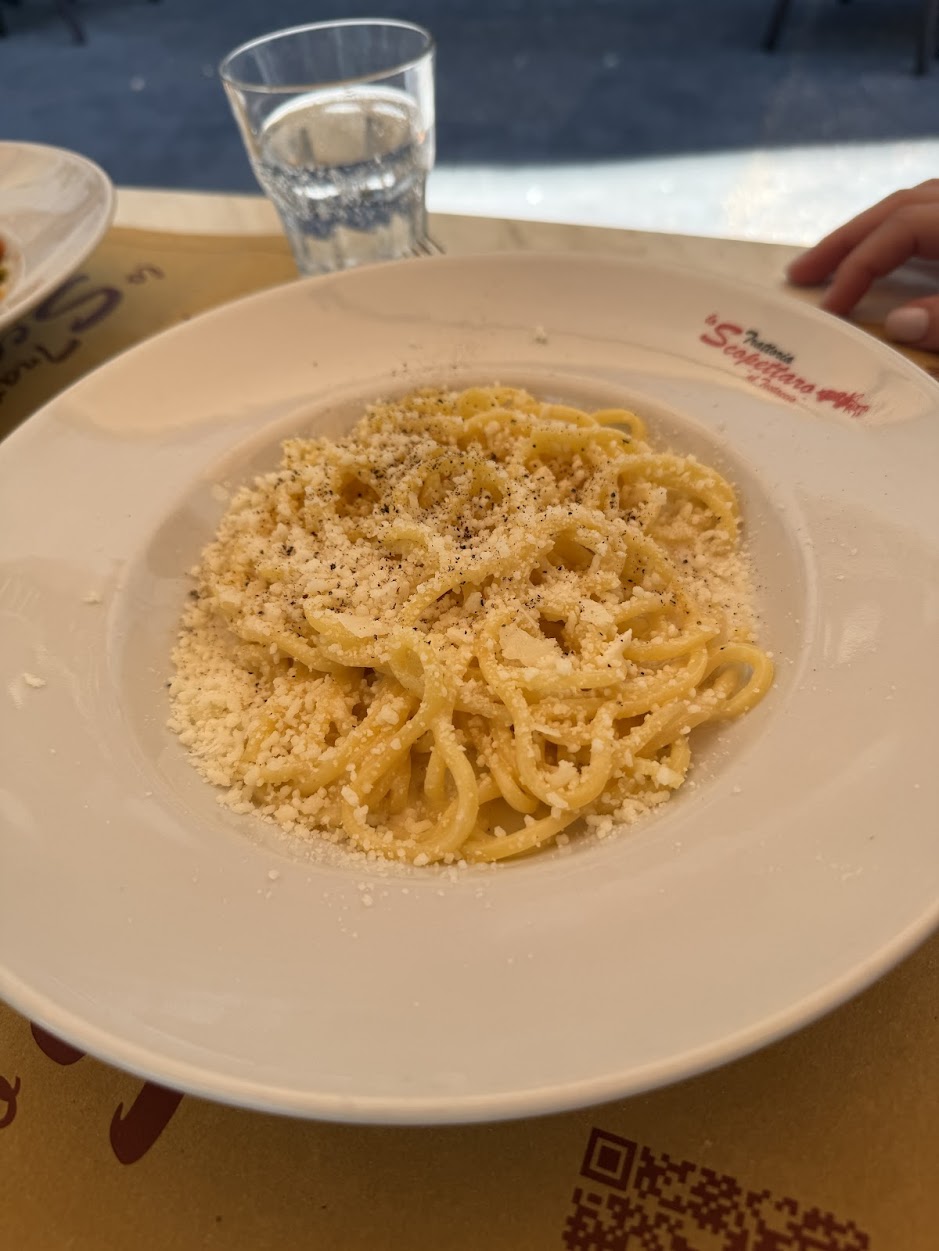
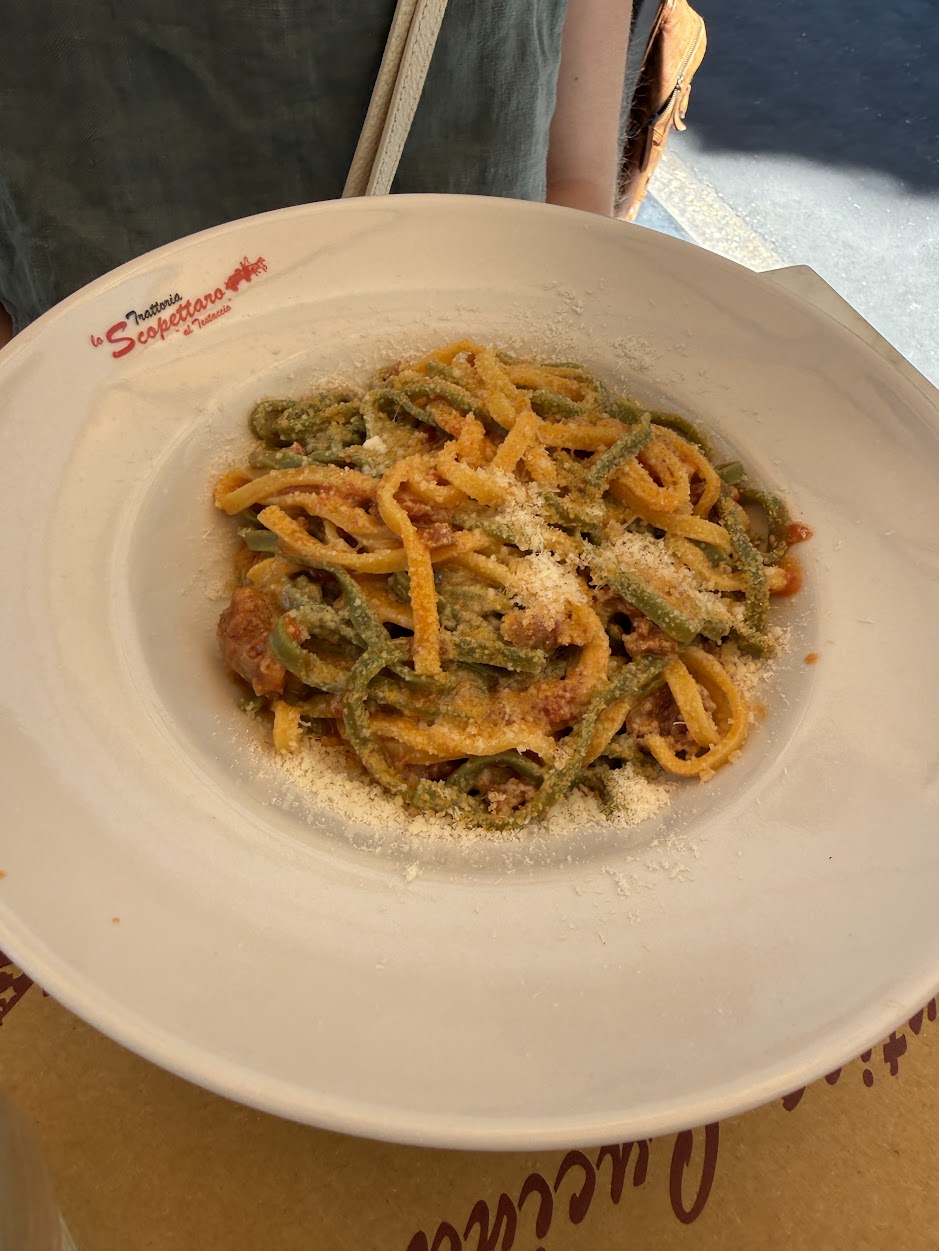
The plaque outside says "Dal 1930." That's 96 years of doing the same thing, in the same place, the same way. No frills. No pretension. No reservations required. The lowest Google rating of all four restaurants we ate at on this trip (4.4), and by some margin the most authentic food. Seemor gave it a cuisine authenticity score of 9.0, the highest of any restaurant we visited.
Google would rank it below Mimì e Cocò every time. There is absolutely zero chance we would have found this place without Seemor.
Night 2: EVO Hosteria Trastevere
Seemor grade: A. Google rating: 4.6. Food quality: 8.5.
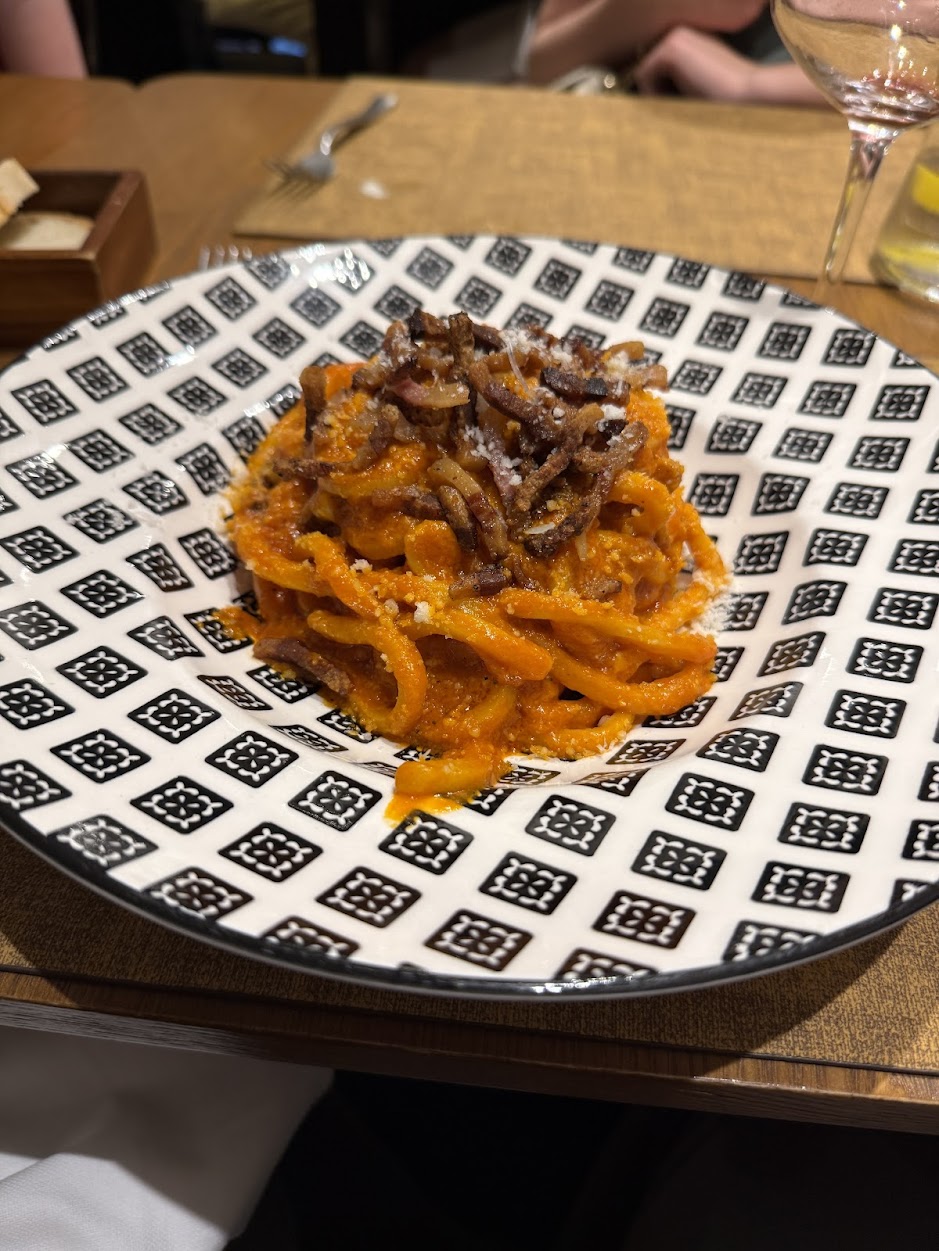
EVO was beautiful. The plates alone tell you this is a different kind of place: each one hand-painted in intricate blue-and-white geometric patterns. The prosciutto and burrata was perfectly simple. The amatriciana was vivid and rich. The cacio e pepe was silky.
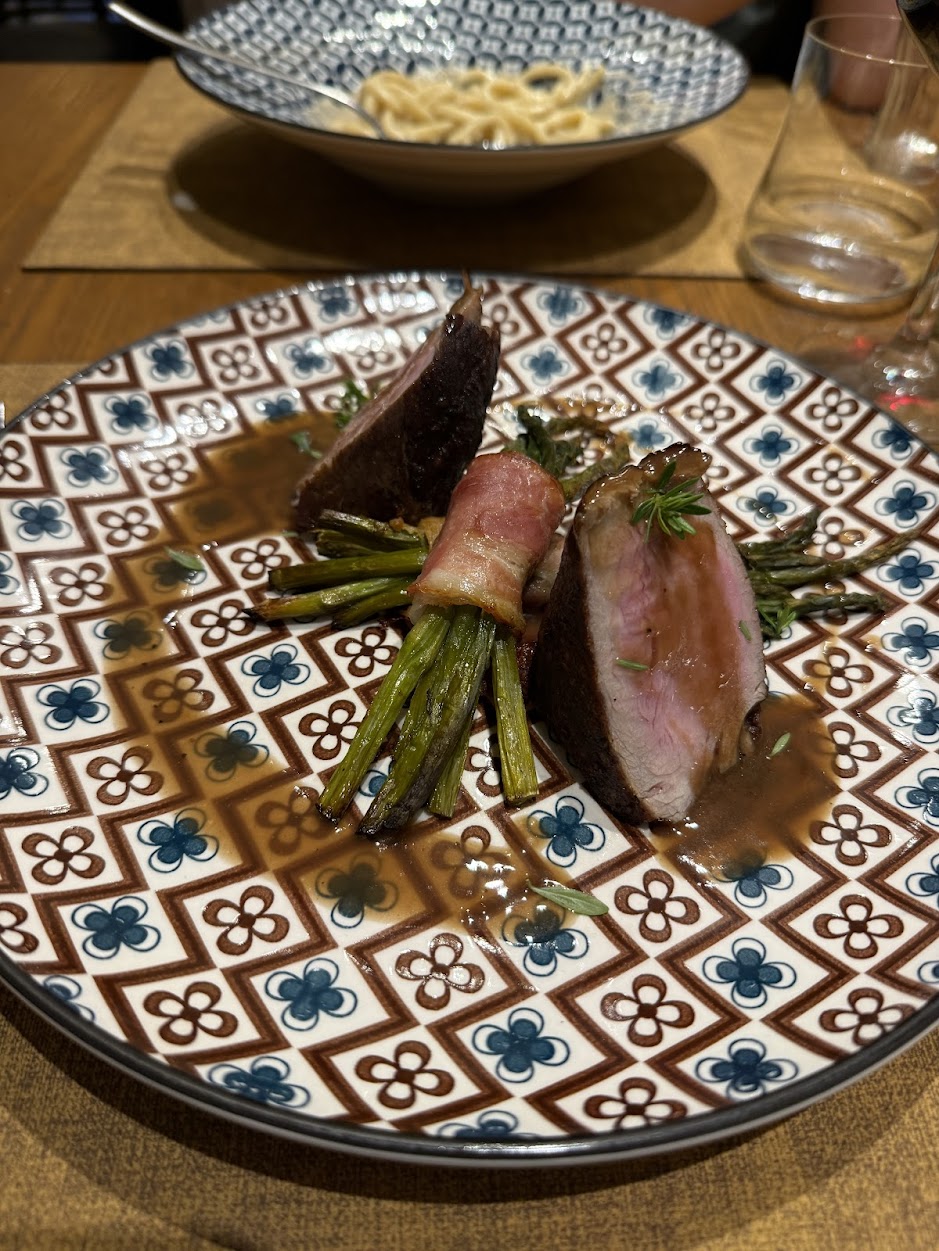
The food was excellent. We were in and out in about an hour. Not because they rushed us. The service was attentive, the courses came when they should. It just didn't have the leisurely, drawn-out quality of a great Roman evening. Very, very good food, efficient execution, fine dining plating. If you're looking for a polished dinner with consistently great food, EVO delivers. It just didn't make us linger. This was also a bit off the beaten path and would have been unlikely to find without Seemor calling it out.
Night 3: La Pace del Palato
Seemor grade: A. Google rating: 4.7. Food quality: 8.6.
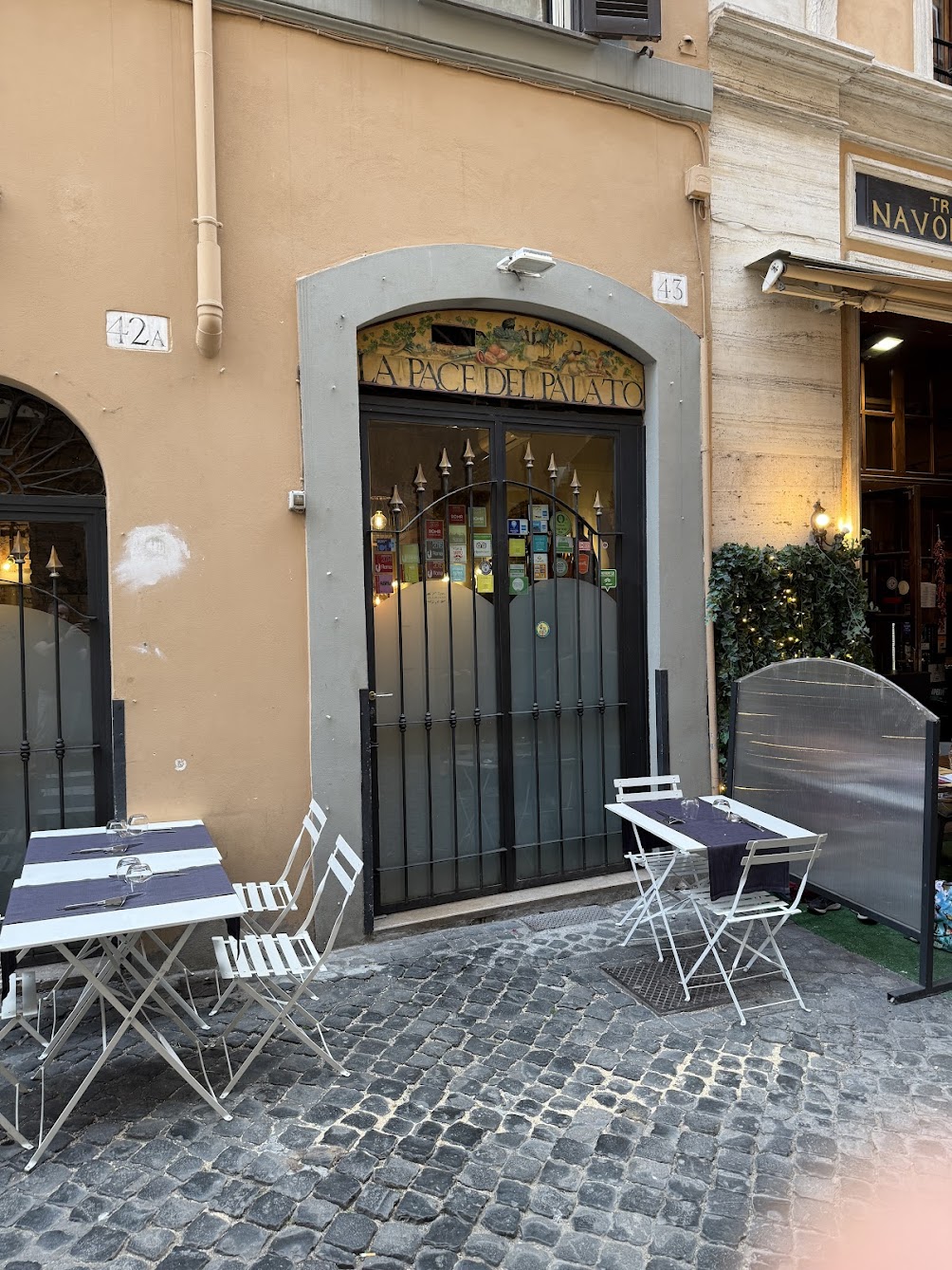
This was the final dinner of the trip, and it turned into the most memorable meal of the entire week.
La Pace del Palato is a small restaurant on a quiet side street. It doesn't open until 7:30pm (which tells you they are not that interested in the tourist crowd). Reservations are required. There appears to be one chef. It feels family-run in the best possible way. The menu is a single printed page, and at the bottom it reads:
"Our cuisine is express cuisine and requires time and patience. Our chef gives you an experience. If you are in a hurry, we are not the right place for you!"
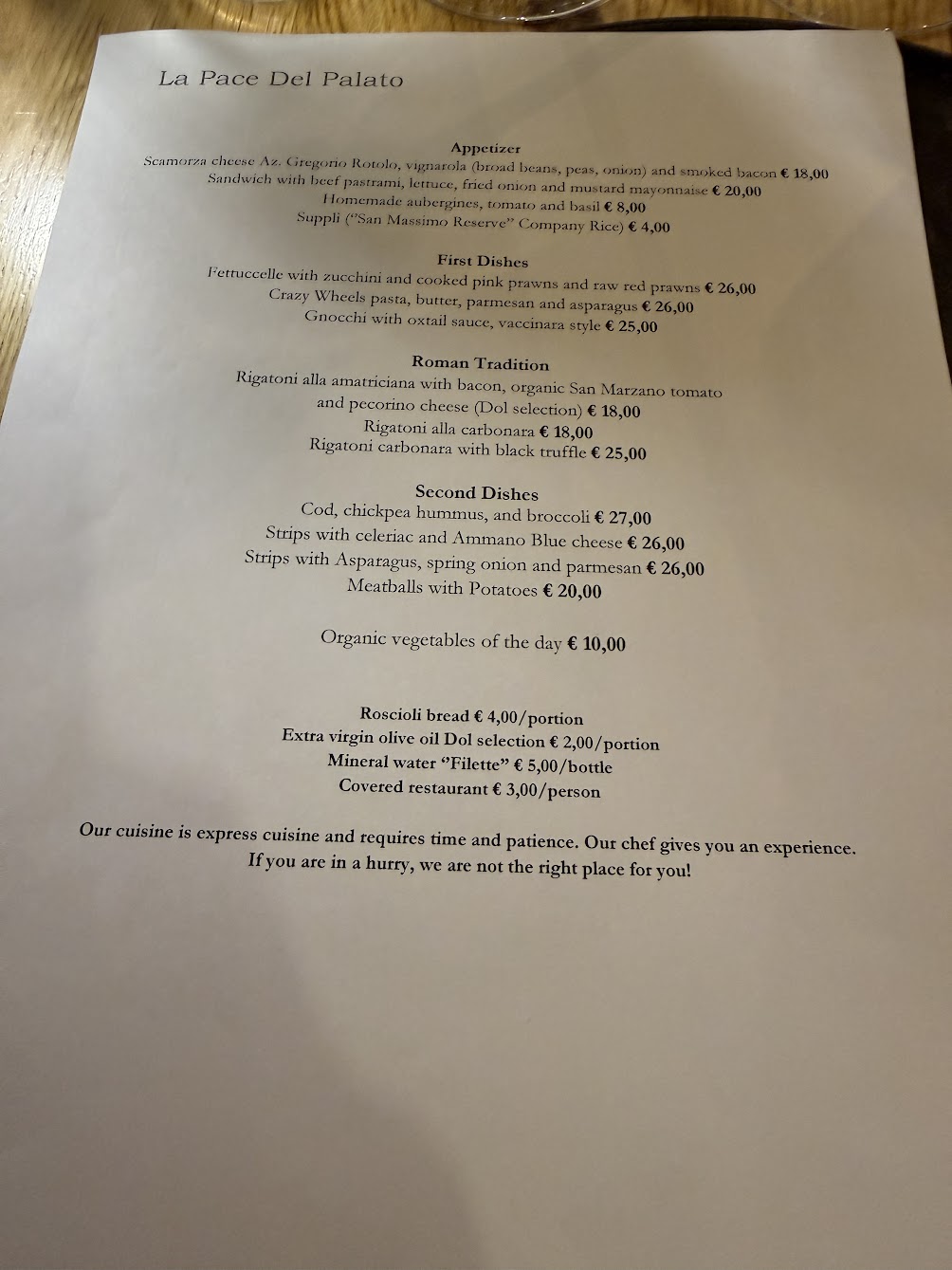
They meant it. Dinner was over two hours, and it never felt slow.
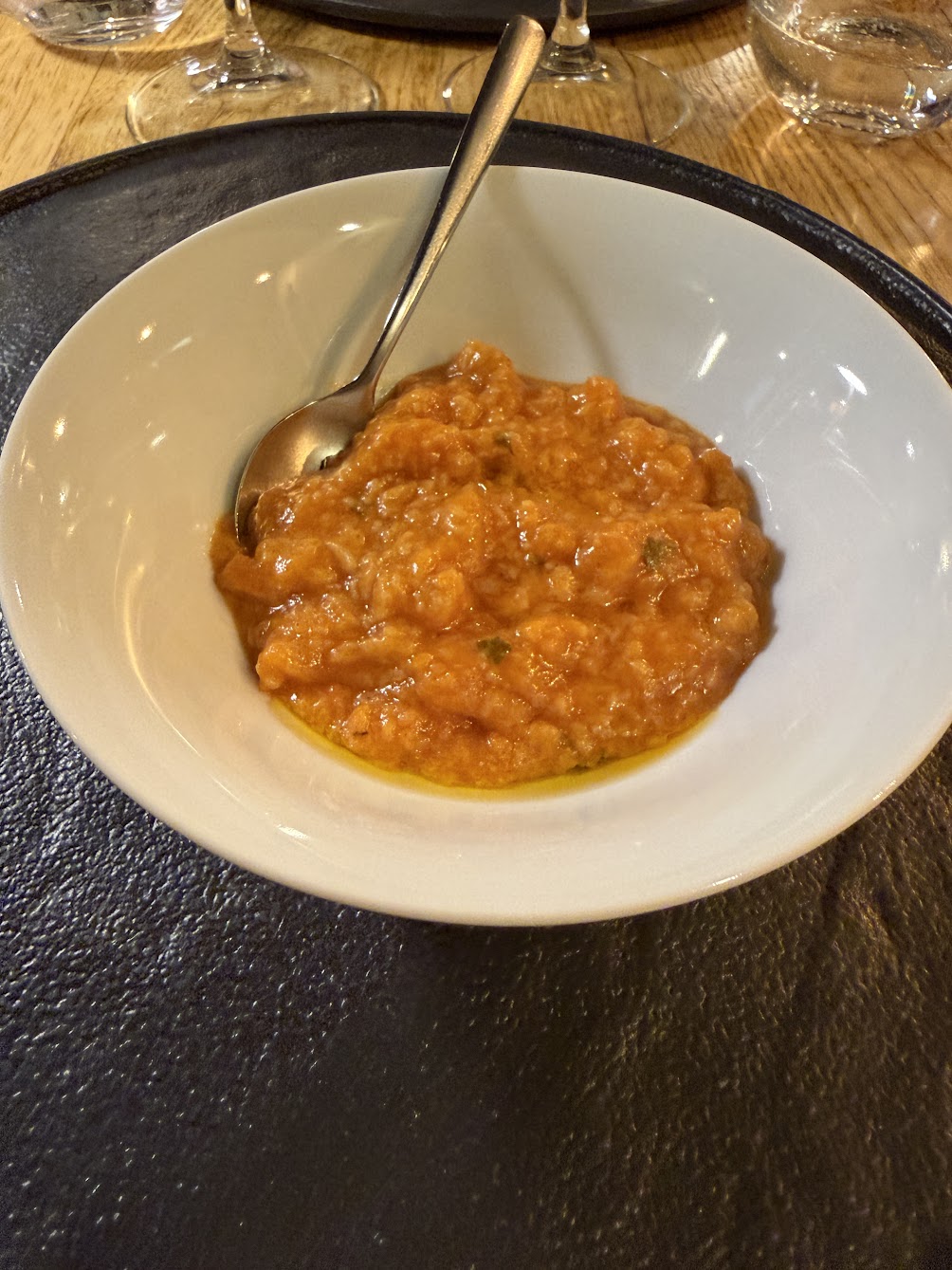
Before we had ordered anything, a small bowl arrived at the table: a tomato and bread concoction, almost like a thick pappa al pomodoro, drizzled in olive oil. It was a gift from the chef. We hadn't asked for it. It was extraordinary.
Then the supplì arrived, golden and crispy and better than any version we'd had from a street vendor. Then a vignarola, the traditional Roman spring vegetable stew with broad beans, peas, and onion, served in a terracotta bowl.
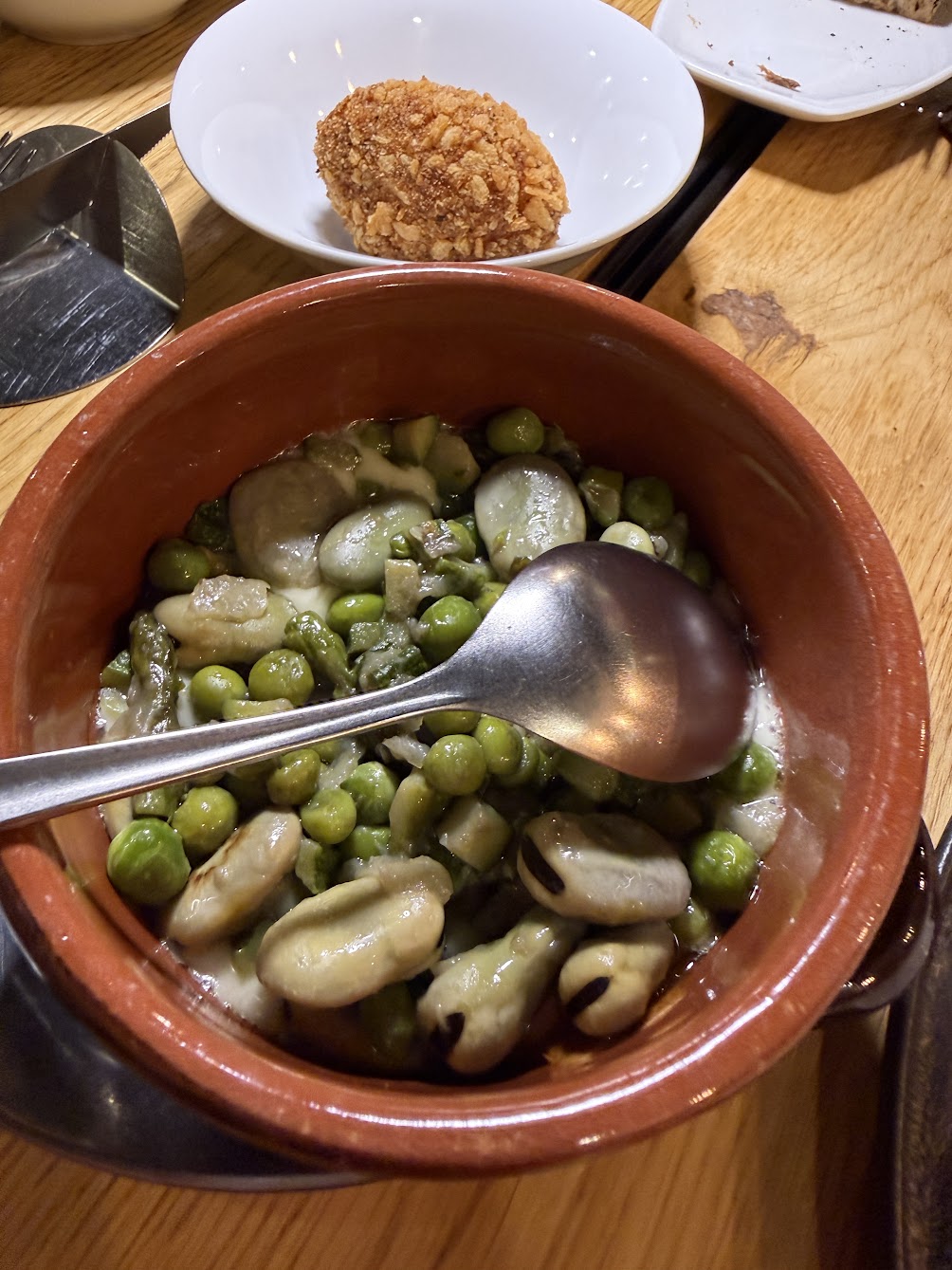
Between the appetizers and the pasta course, the chef sent out an aubergine dish we hadn't ordered. We aren't particularly big fans of eggplant. We ate every bite.
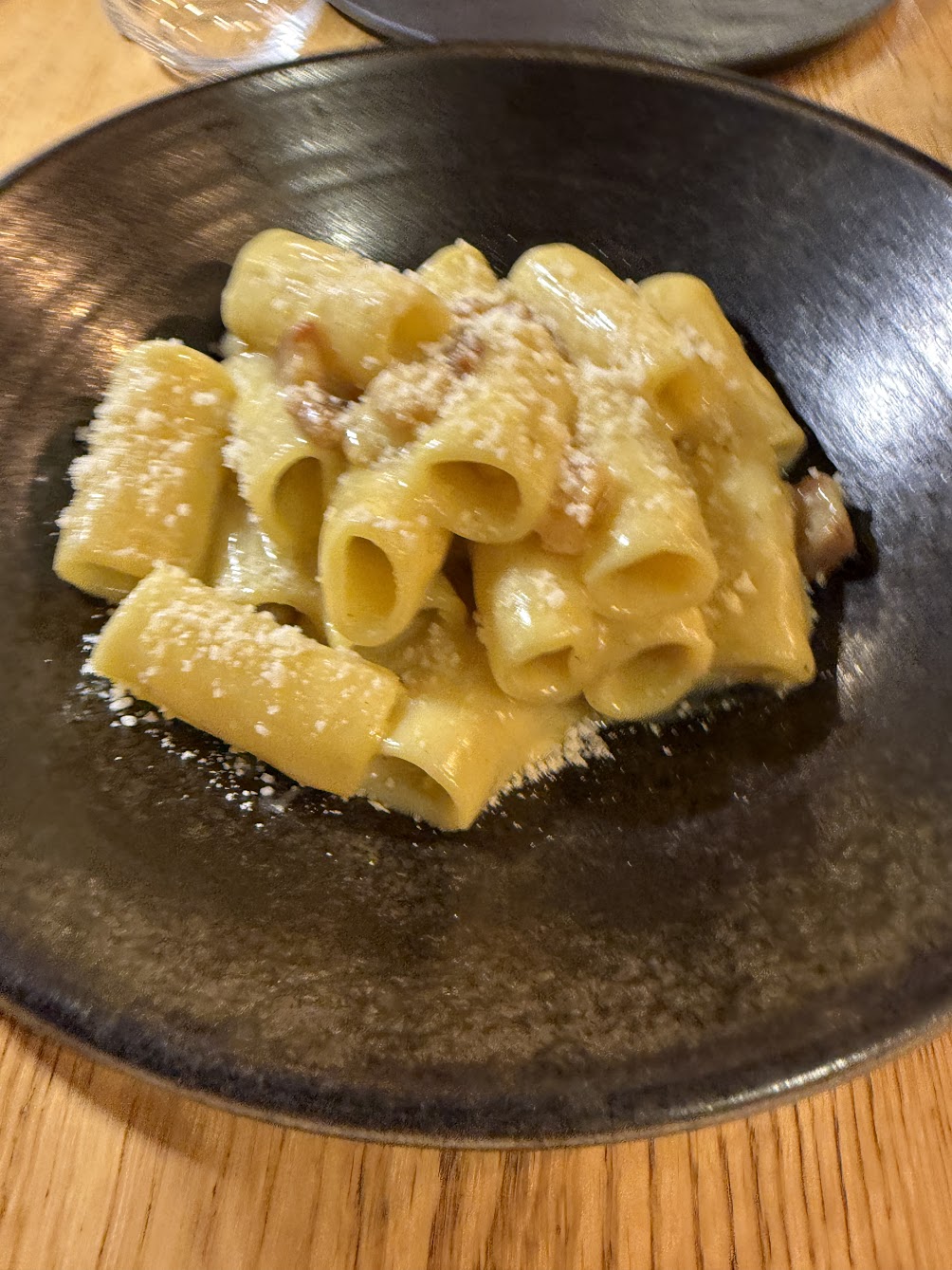
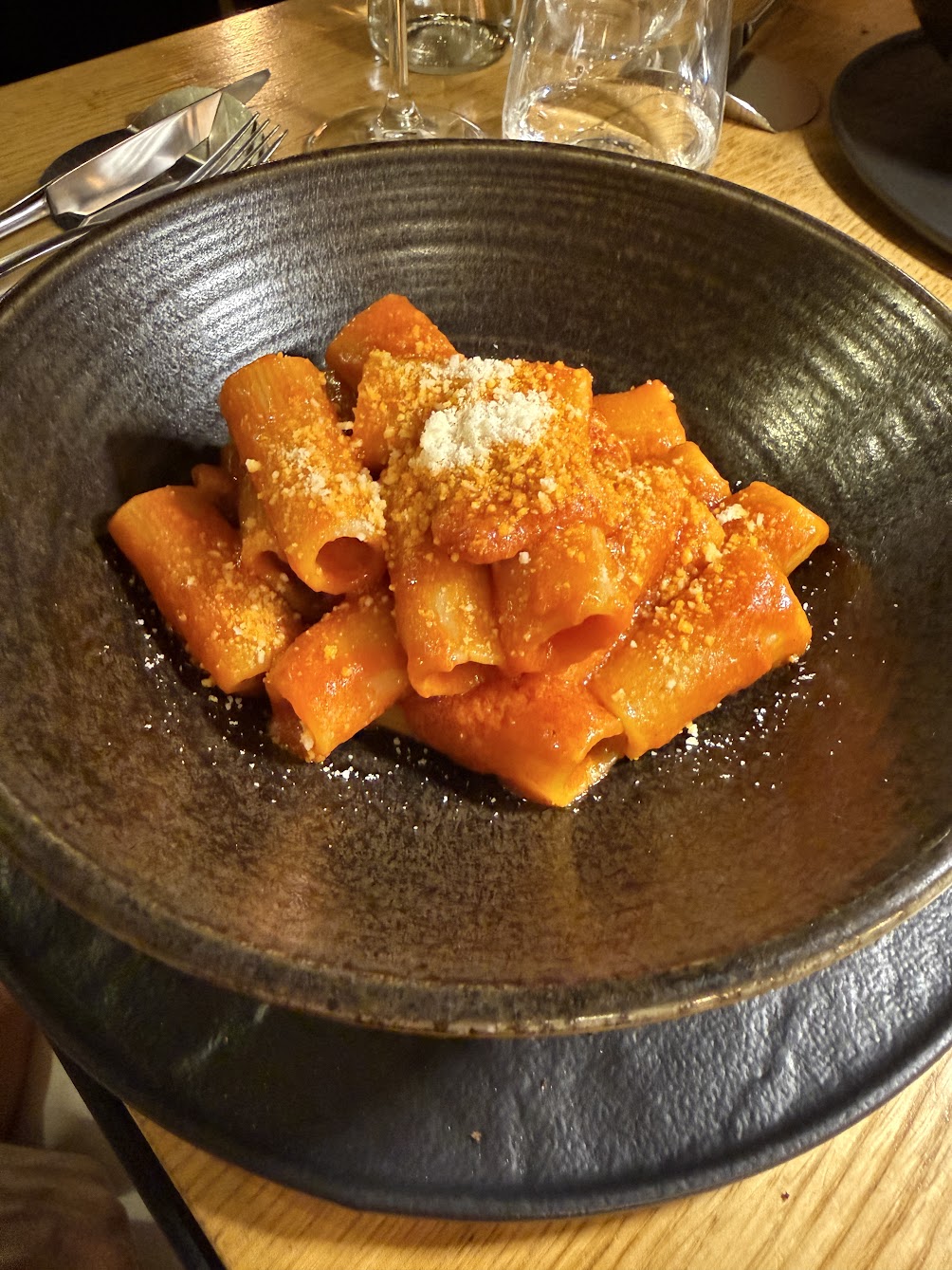
The pasta courses were Roman tradition done at the highest level. Rigatoni alla carbonara and rigatoni all'amatriciana, each served in dark ceramic bowls that made the golden and red sauces glow. This was the course that anchored the meal to Rome. Same dishes we'd had at Scopettaro two nights earlier, prepared with a different hand. Both versions were among the best we've ever eaten.
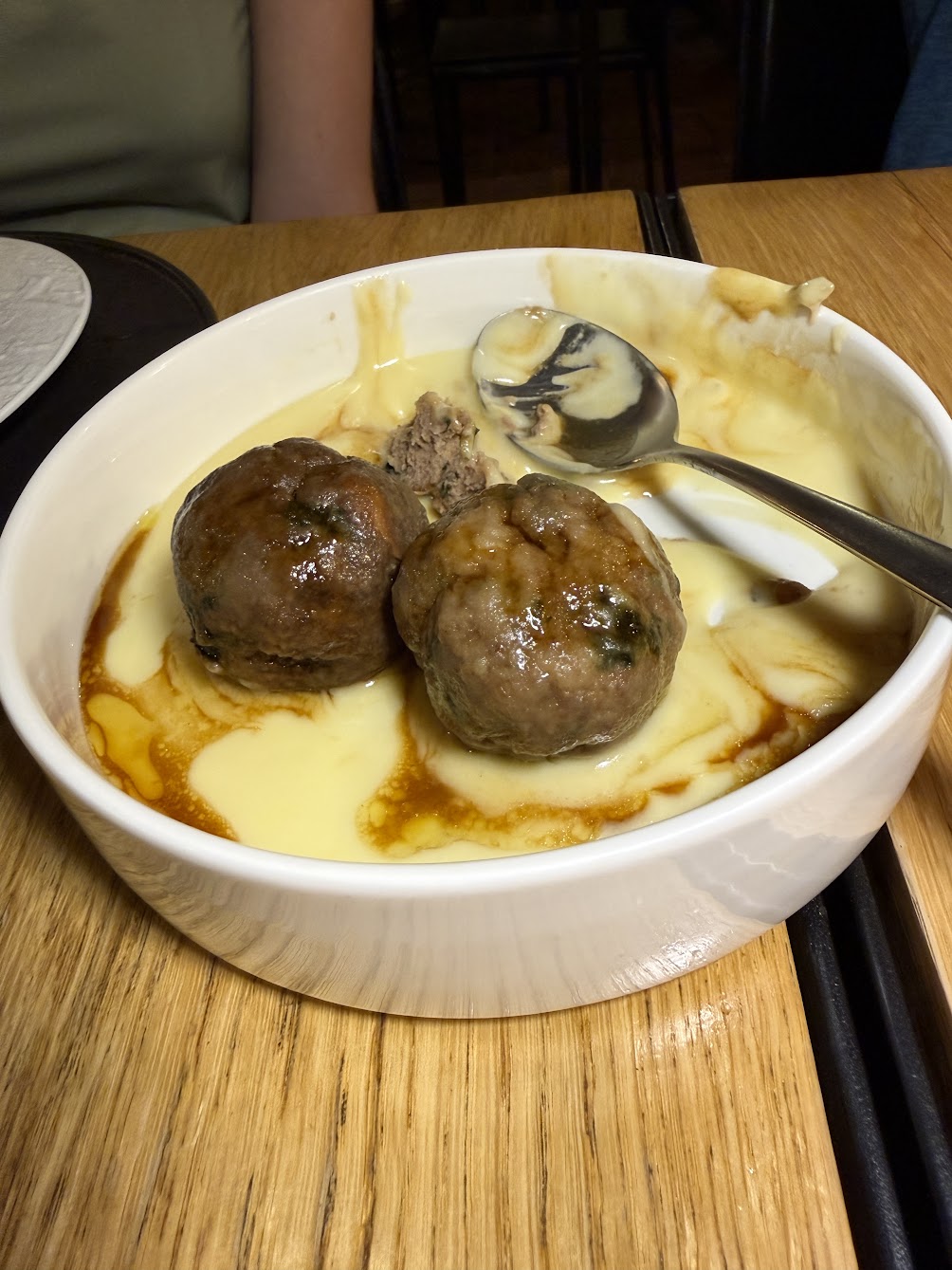
Then came the secondi. Meatballs in a rich sauce. Strips of meat with asparagus, spring onion, and parmesan. Things we'd never seen on a Roman menu before. Things we wouldn't have known to order (Seemor strongly suggested the meatballs).
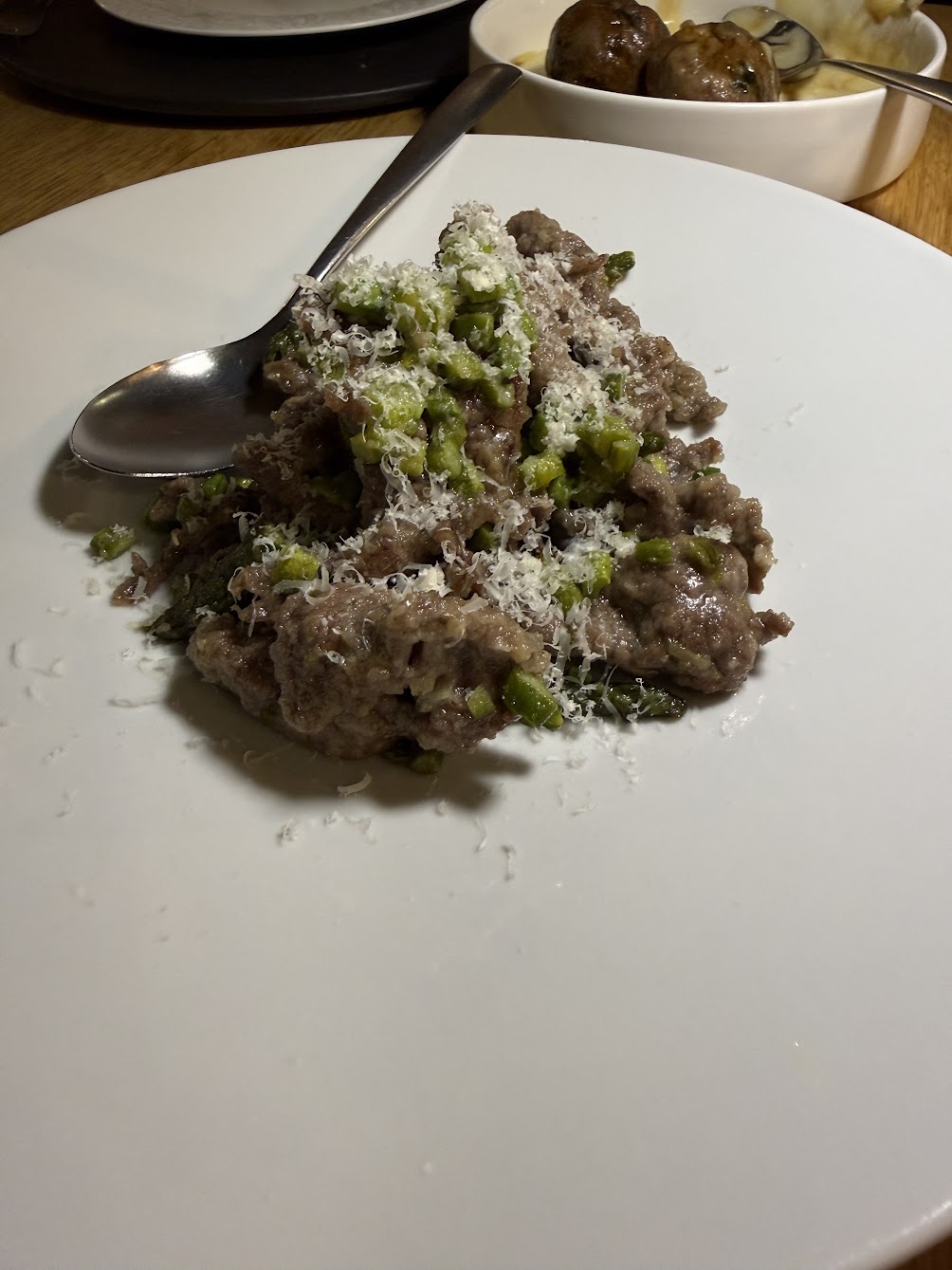
It was a 2+ hour dinner with courses we didn't choose, food we didn't expect, and an experience that redefined what a Roman dinner could be. The staff were warm and attentive throughout, not hovering, just present. Seemor had flagged it as an A with 8.6 food quality, the highest of the trip. The score didn't capture the half of it.
What Mimì e Cocò taught us
It was helpful that we went back to Mimì e Cocò on this trip to make sure we had a clear benchmark. It was good. The charcuterie board was generous. The amatriciana was solid. The carbonara was perfectly fine. The ambience was exactly what we remembered: bustling, warm, the kind of place where you feel like you're having a proper Roman evening.
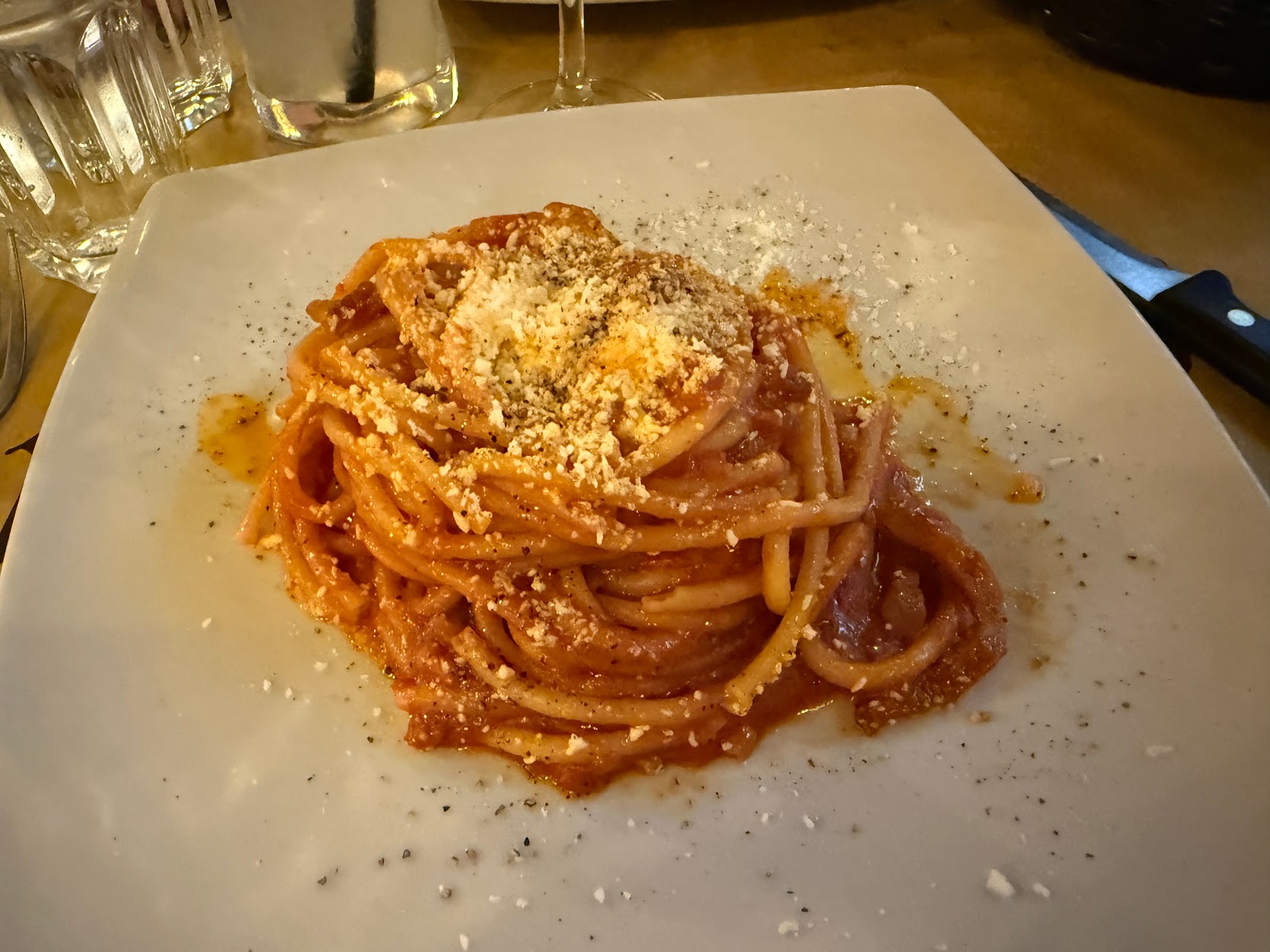
It's still a B+. It's still a place we'd recommend, especially in the centro storico where the tourist trap density is high and a lot of what's around you is worse. Mimì e Cocò is legitimately good.
But the food quality gap between 7.7 and 8.4-8.6 is not a rounding error. It's the difference between a really good dinner and the three best Italian meals of our lives. We just didn't know that gap existed until we ate on the other side of it.
The gap between good and fantastic
Rome is a city where the floor is high. Italian food in Italy, with Italian ingredients, cooked by Italian hands. Even the tourist traps are usually pretty good. That's what makes it so easy to think you've found the best of it when what you've actually found is the comfortable middle.
Only 2.9% of the restaurants we've analyzed in Rome earn an A or higher. Your old go-to is probably in the B+ range. It's probably good. It was good enough for us for four years.
Google ratings won't help you find the difference. Our three Seemor picks had Google ratings of 4.4, 4.6, and 4.7. Mimì e Cocò also has a 4.7. The best meal of the trip (Scopettaro, 4.4) had the lowest Google rating of any restaurant we ate at. Google would have ranked it last. The ratings compress everything into a band where a 96-year-old trattoria serving mind-blowingly good carbonara looks worse than a perfectly fine tourist spot with 10,000 happy reviews.
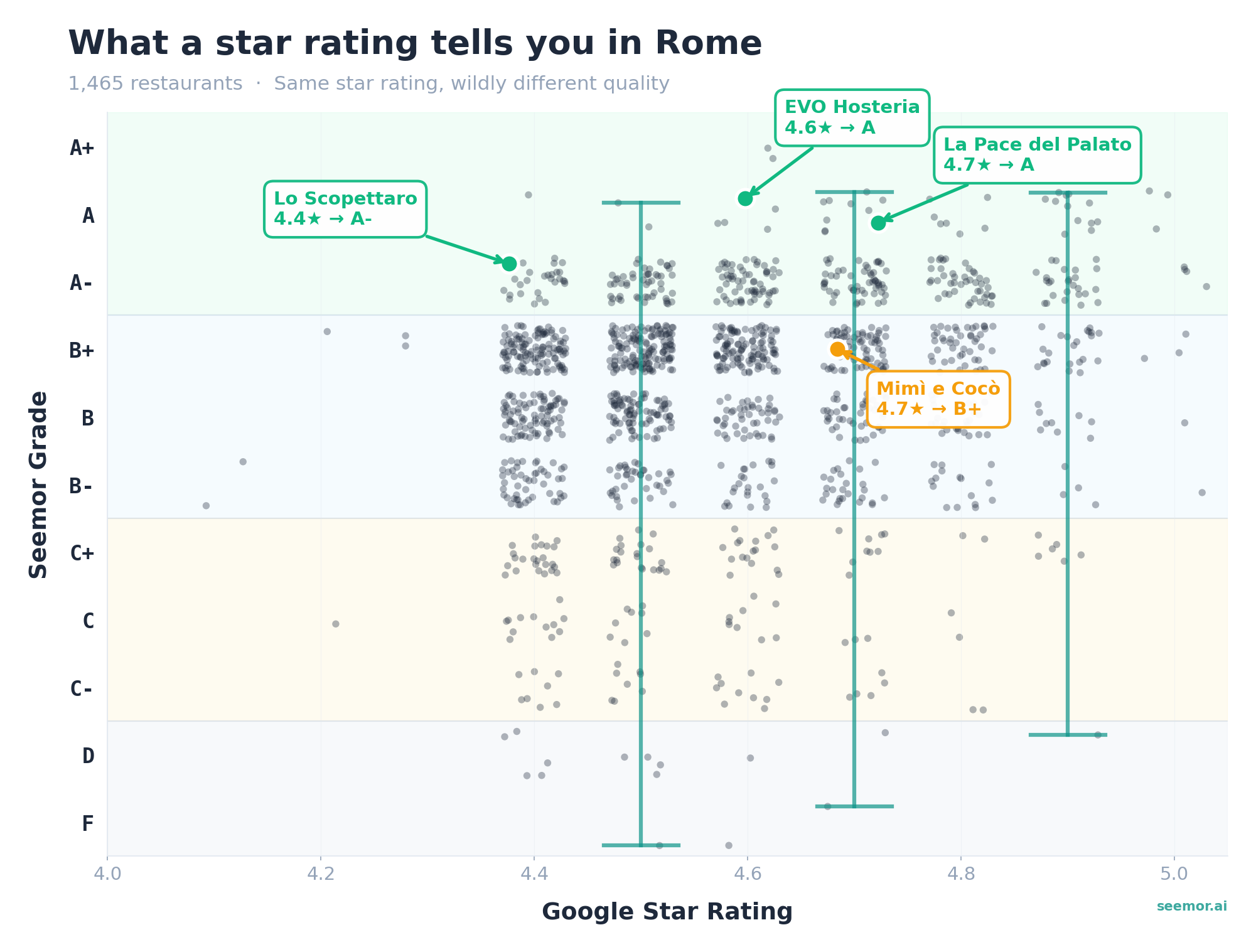
The question is whether you know what you're missing. We didn't.
Three different restaurants. Three completely different experiences. Scopettaro: plastic tables, handwritten bills, 96 years of no-frills perfection. EVO: polished plates, great food, efficient and elegant. La Pace del Palato: a two-hour chef-driven journey with courses you didn't order and didn't know you needed.
All three were A-grade. All three were available on this trip because Seemor pointed us in a direction we wouldn't have gone on our own.
Total time spent researching these three restaurants on Seemor: maybe five minutes. Plus a year of intensive product development and manual calibration with restaurant visits, but who's counting.
We didn't think that Italian could be much better than our old favorite. Wow were we wrong. We are excited to see where Seemor takes us next.
Explore Rome's restaurants and grades at app.seemor.ai/city/rome. We've analyzed nearly 1,500 restaurants across the city.
Explore restaurants mentioned in this article:
See what Seemor finds for you
Honest grades, personal scores, and 35+ dimensions of quality across 12 cities.
Try Seemor free